Business Capability Model

A business capability model (BCM) is a high-level view of an organization's business capabilities. Essentially it captures and describes everything that an organization can do in terms of discrete capabilities. Business capability models are typically stable and organizationally neutral in nature. They are largely independent of specific organizational structures, reporting relationships, political agendas and cultural aspects of individual business leaders, current initiatives and projects. Furthermore, most changes happening in organizations do not affect the fundamental structure of their business capability models – unless the organization is going through a radical change of direction in what it does.
Within this site there is a comprehensive example of a BCM for a tolling and road user charging organisation in the Big Picture section here.
Another example - a business capability model for a government based child support agency.
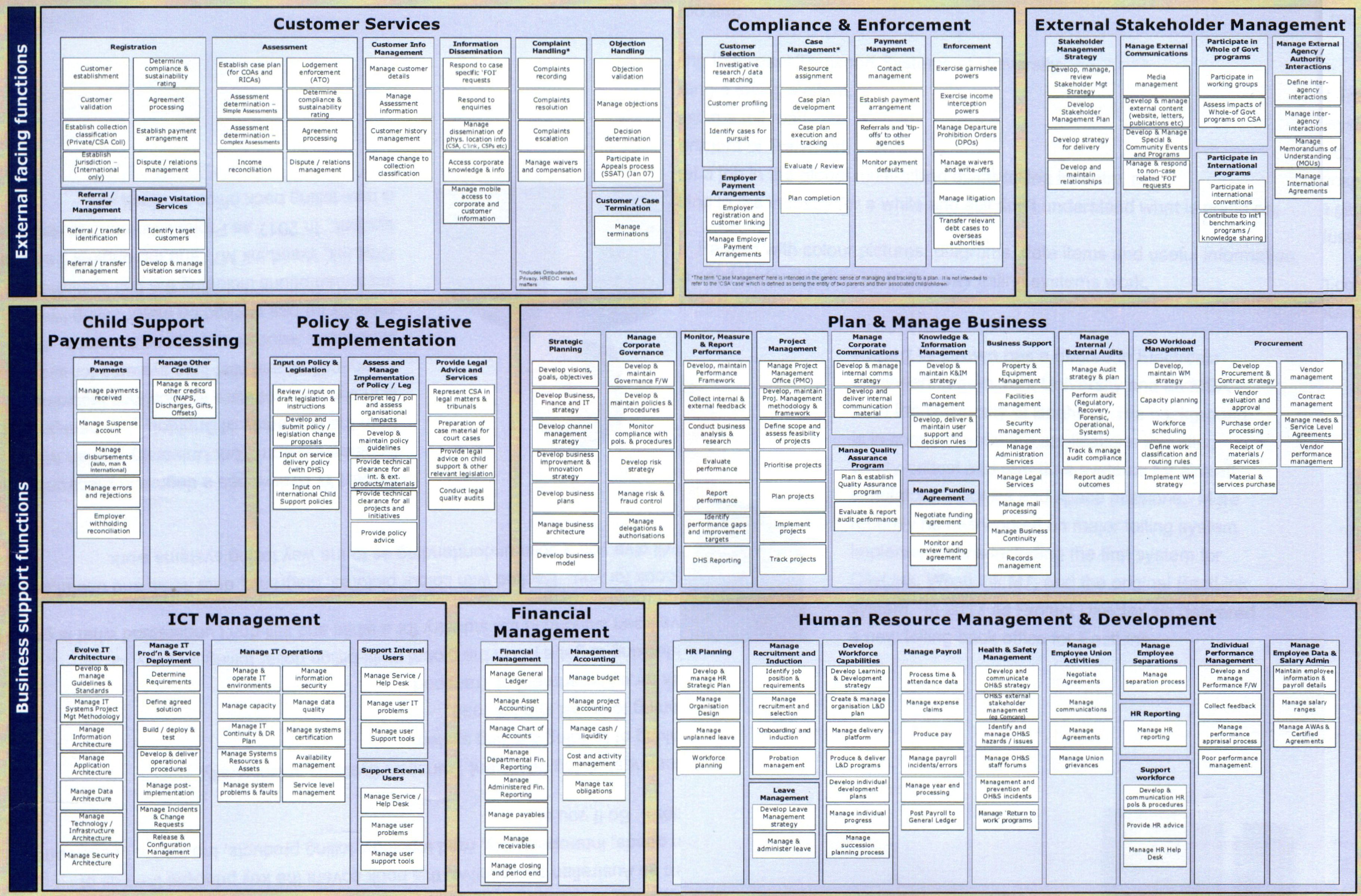
A business capability model for a government based child support agency.
Thinking about our Cellar Door example, we can go back to the rich picture. Using our experience of organisations and how they work, we can tease from the rich picture the main business capability areas in the following way:
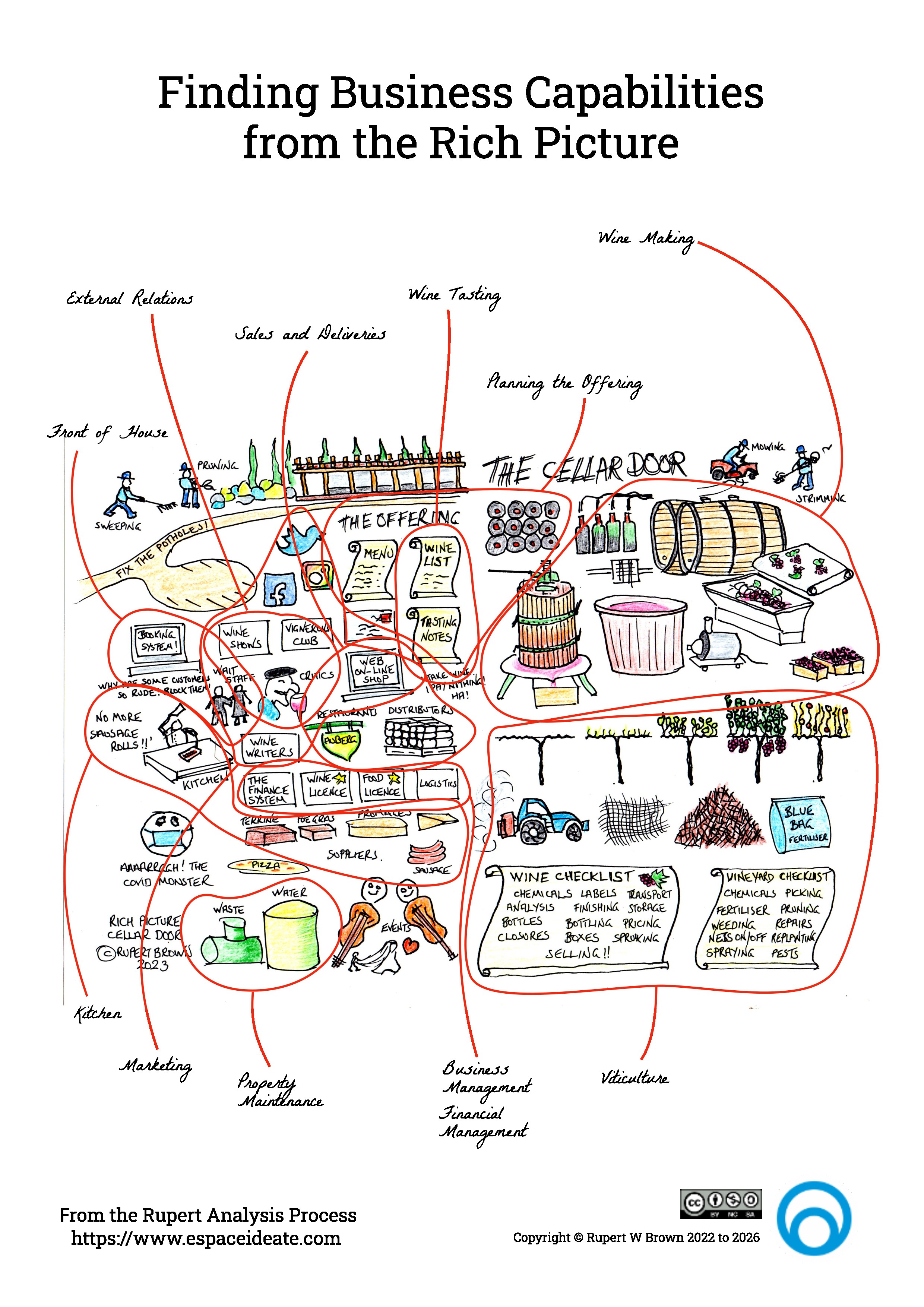
Finding Business Capabilities from the Rich Picture.
Then, based on the user stories already gathered, and further interviews with Cellar Door staff, we can build out the business capability model into something as follows:
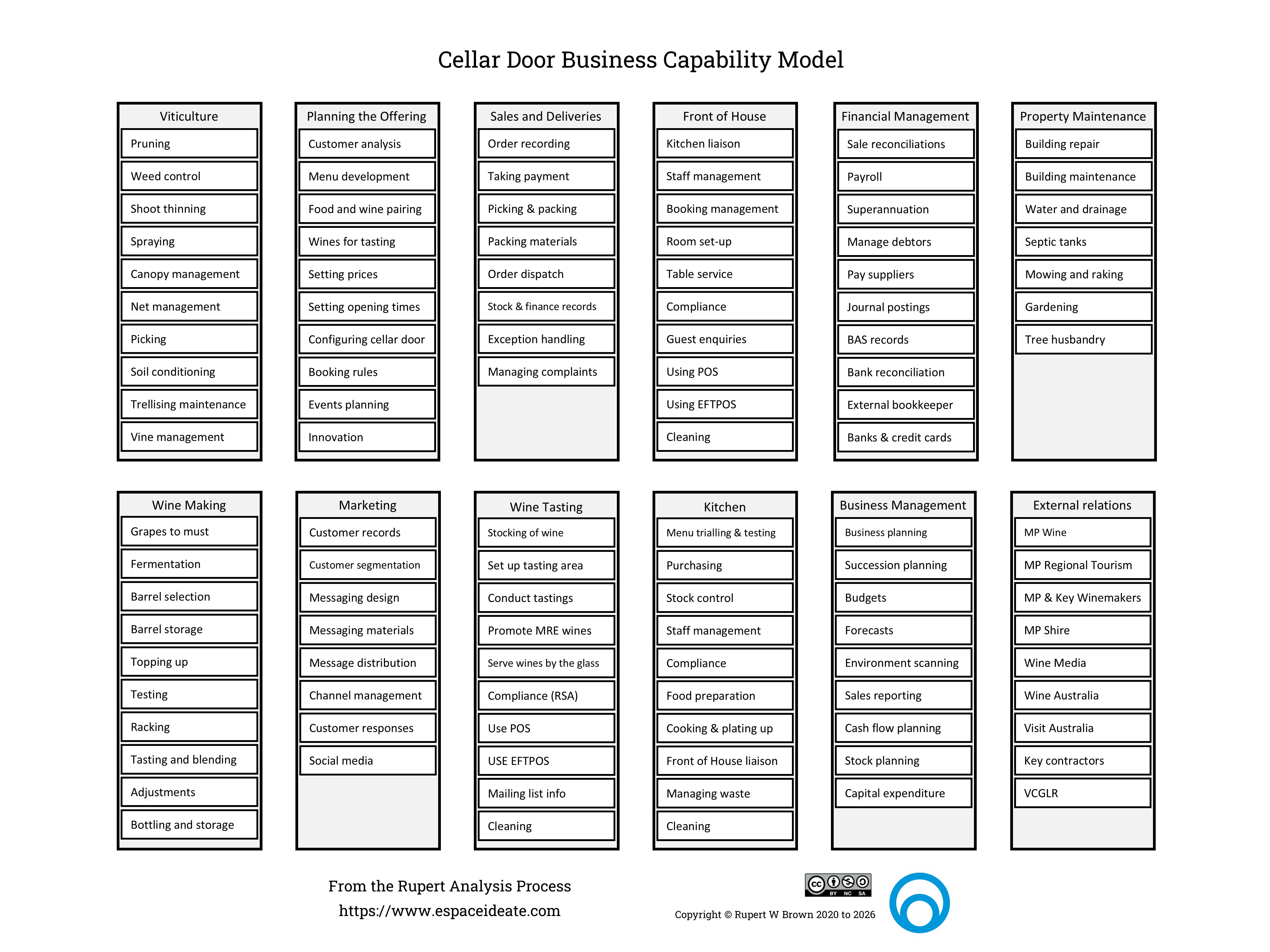
The Cellar Door Business Capability Model.